


August 2026
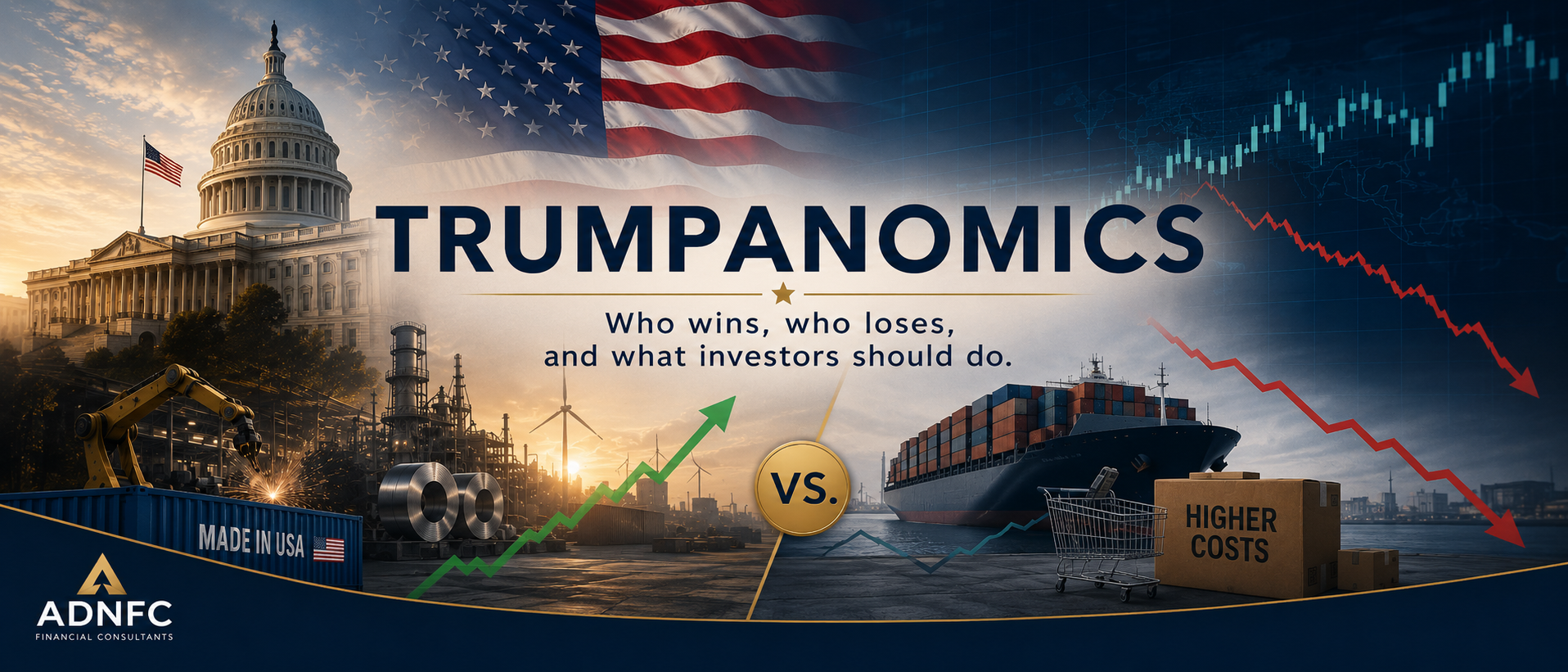
Whether you love Donald Trump or loathe him, your investment portfolio doesn’t get a vote.
Markets care about something much less emotional: profits, inflation, interest rates, government borrowing and where companies are going to make their money.
And President Trump’s economic policies are having an impact on all of them.
Trumpanomics is really a combination of tariffs, tax cuts, deregulation and a push to bring more manufacturing and strategic industries back to the United States.
The result is not simply “markets up” or “markets down”.
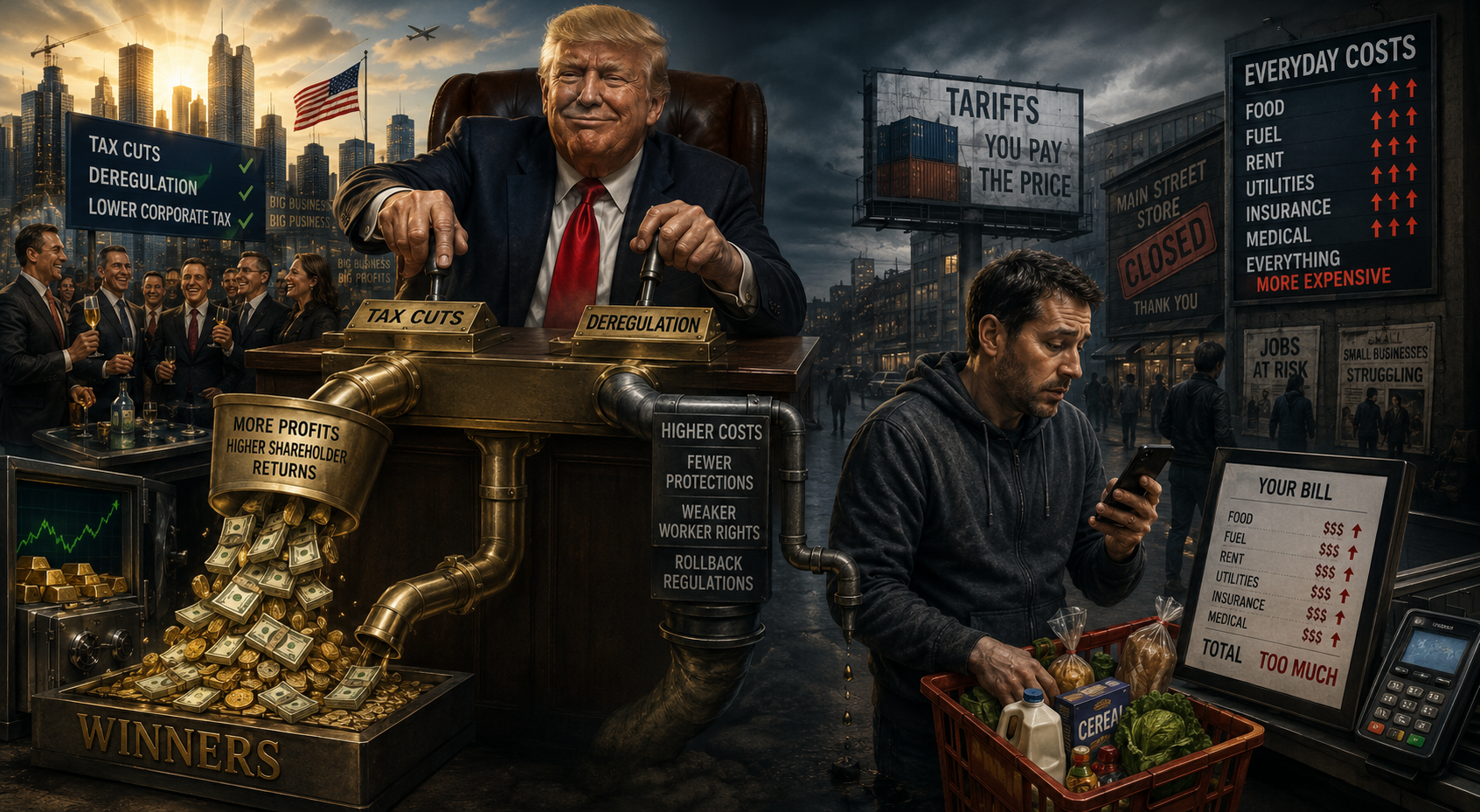
It is creating winners and losers.
The Potential Winners
Tariffs can benefit American businesses that compete directly with imports, particularly areas such as manufacturing, steel, defence, infrastructure, mining and critical minerals.
Companies with strong margins and pricing power may also be better placed to cope with higher costs.
Businesses positioned to benefit from increased US investment and domestic production may find themselves on the stronger side of the changing economic landscape.
But there is another side.
Tariffs Create Costs too
If a business relies heavily on imported goods, components or raw materials, tariffs can increase its costs.
That cost either reduces profits or eventually gets passed on to customers.
And if prices rise, inflation can remain higher.
That matters because higher inflation can keep interest rates higher for longer.
For businesses carrying significant debt, or sectors particularly sensitive to borrowing costs, that can create additional pressure.
Who Could Lose?
Businesses under the most pressure may include low-margin retailers, import-dependent manufacturers, parts of the automotive sector and highly indebted companies.
Technology is another area to watch, with AI and semiconductor supply chains increasingly influenced by trade policy.
Today’s winner can quickly become tomorrow’s loser.

Why Investors Should Care
If tariffs push prices higher, inflation can stay elevated.
And if inflation stays higher, interest rates may remain higher for longer.
That can be difficult for heavily indebted businesses and parts of the market that rely on cheap borrowing.
Technology is another interesting area.
AI investment remains huge, but semiconductor supply chains are increasingly tied to trade policy.
Today’s winner can quickly become tomorrow’s political target.
What About Tax Cuts and Deregulation
Tariffs are only one part of Trumpanomics.
Tax policy and deregulation can also support certain businesses by reducing costs, encouraging investment and potentially improving profitability.
But there are wider consequences to consider.
Tax cuts can support economic activity, while also raising questions around government borrowing.
Deregulation may benefit some industries significantly while having very little impact on others.
For investors, this is another reminder that economic policy rarely creates one clear winner across the entire market.
So What Should Investors Do?
The answer is not to rebuild your portfolio every time another policy announcement appears.
Instead, focus on what still matters:
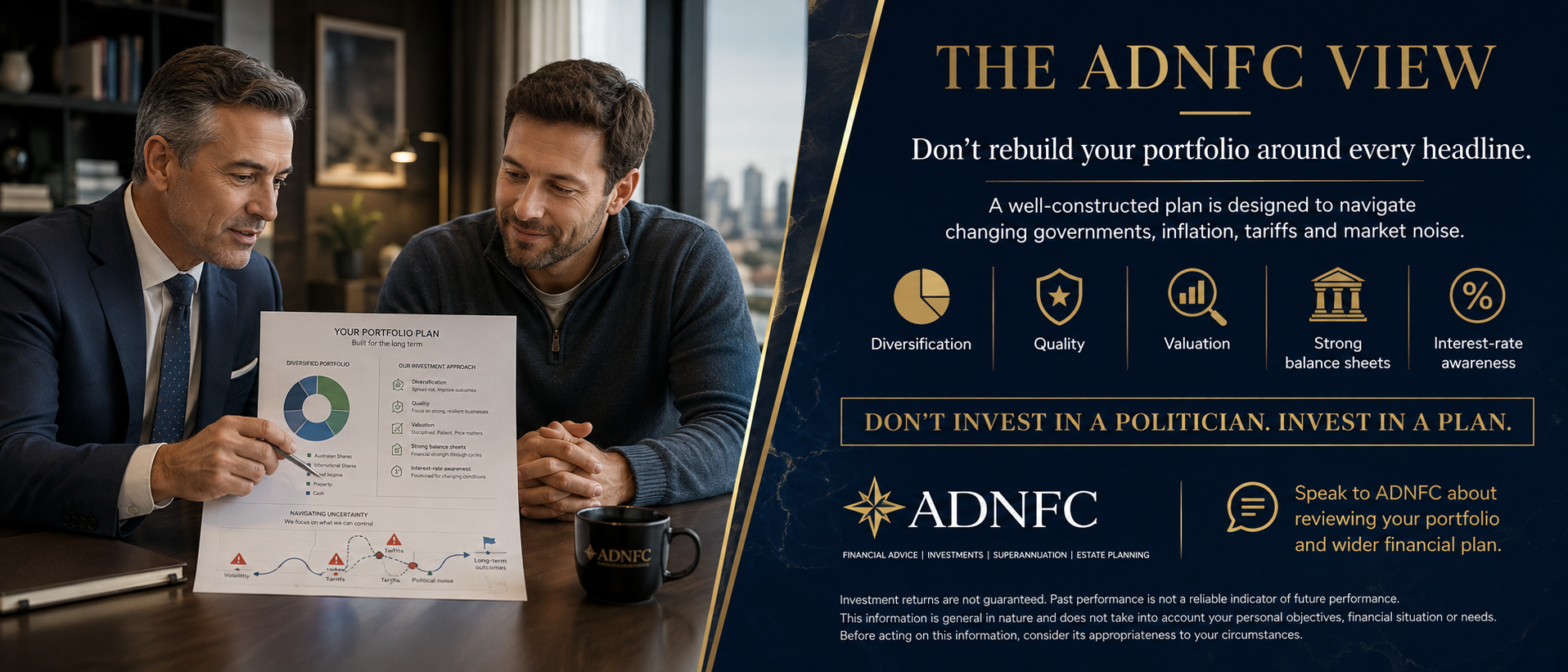
Diversification. Quality. Valuation. Strong balance sheets. Interest-rate exposure.
And for UK investors, remember that movements between sterling and the US dollar can also materially affect returns.
A better question is:
“Has this changed my long-term investment plan — or just today’s headline?”
The ADNFC View
The lesson from Trumpanomics is not to predict Donald Trump’s next announcement.
Good luck with that.
It is to build an investment strategy that doesn’t require you to.
A well-constructed portfolio should be capable of dealing with changing governments, tariffs, inflation, recessions and interest-rate cycles.
There will be winners.
There will be losers.
DON’T INVEST IN A POLITICIAN. INVEST IN A PLAN.
Is Your Portfolio Still Right For You?
If recent political and market changes have made you question whether your investments are still positioned appropriately, speak to the ADNFC team about reviewing your portfolio and wider financial plan.
ARRANGE A FINANCIAL REVIEW HERE
The value of investments can fall as well as rise and you may get back less than you invest. Past performance is not a reliable indicator of future performance. Tax treatment depends on individual circumstances and may change in the future. This article is for general information only and does not constitute personal financial or tax advice.
